WOO London Congress 2026
WOO launches Global OOH Audience Measurement Guidelines 2.0 at London Congress
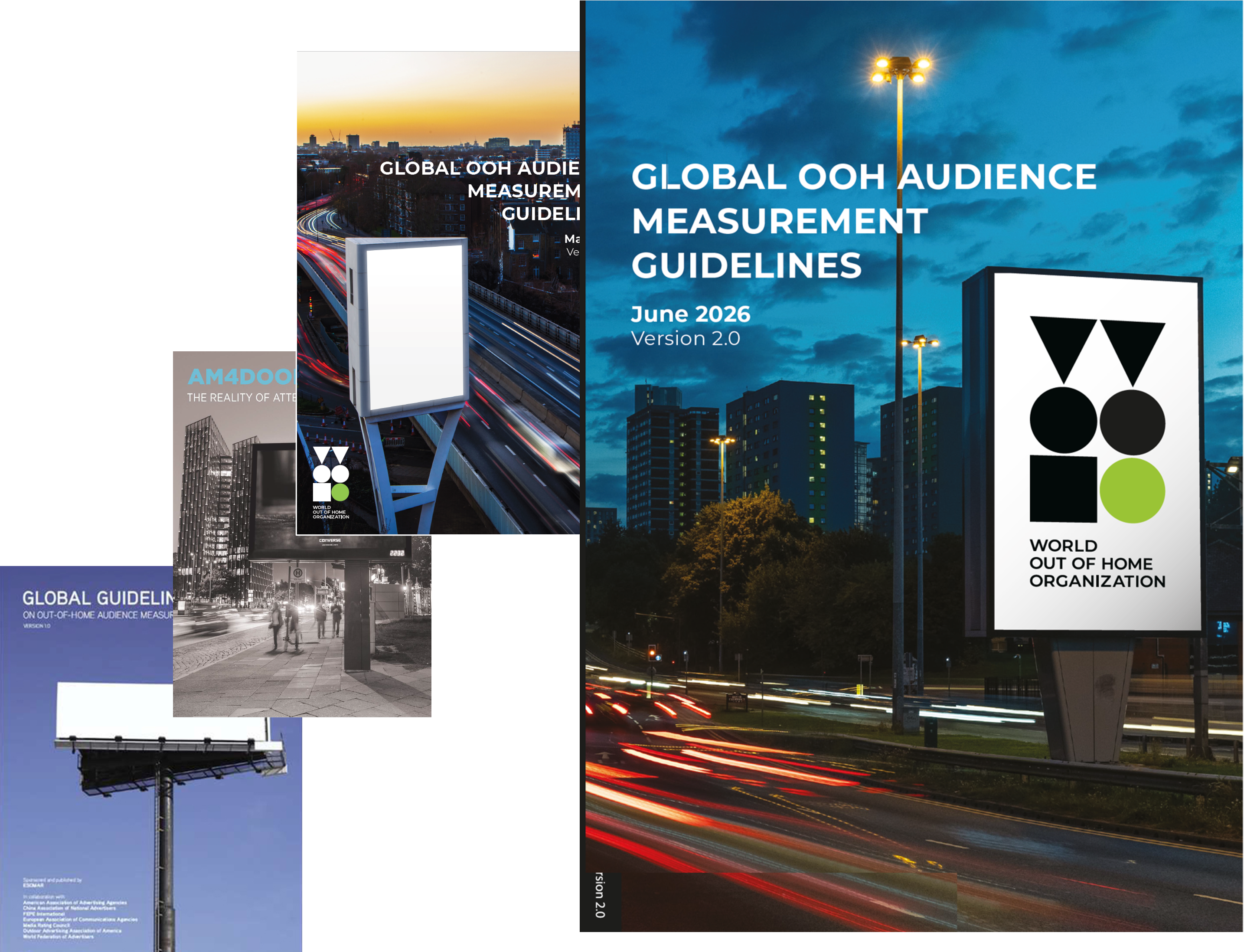
At this year’s World Out of Home Organization Congress in London, we formally launched Version 2.0 of our Global OOH Audience Measurement Guidelines — the most substantial update to the medium’s measurement framework since the original WOO guidelines were published at Congress in 2022.
The first edition was, in its own right, an unusual achievement. Eleven national measurement bodies, alongside two international media owners and two international media buyers, came together to set out a shared approach and a common set of principles, requirements and definitions for measuring OOH audiences around the world. Built upon the 2009 work conducted by ESOMAR, the WOO Guidelines 1.0 articulated, in a single document, what good audience measurement looks like across markets that had developed differing solutions for the same ultimate aim of providing credible, transparent metrics to trade and grow the OOH medium.
Four years on, that initial effort has grown considerably. Guidelines 2.0 now draws on the expertise of measurement bodies spanning twenty-eight territories — more than double the participation seen in the first edition. The new edition runs to over 160 pages and includes 20 individual measurement bodies with case studies on their approach to metrics. Updates to the Approach and Principles sections, revised Measurement Requirements and refreshed OOH Definitions have all been included. The guidelines include newly contributing markets, markets that have rebuilt their measurement systems from the ground up since 2022, and others that have substantially rebuilt systems that were already well established.
What has changed
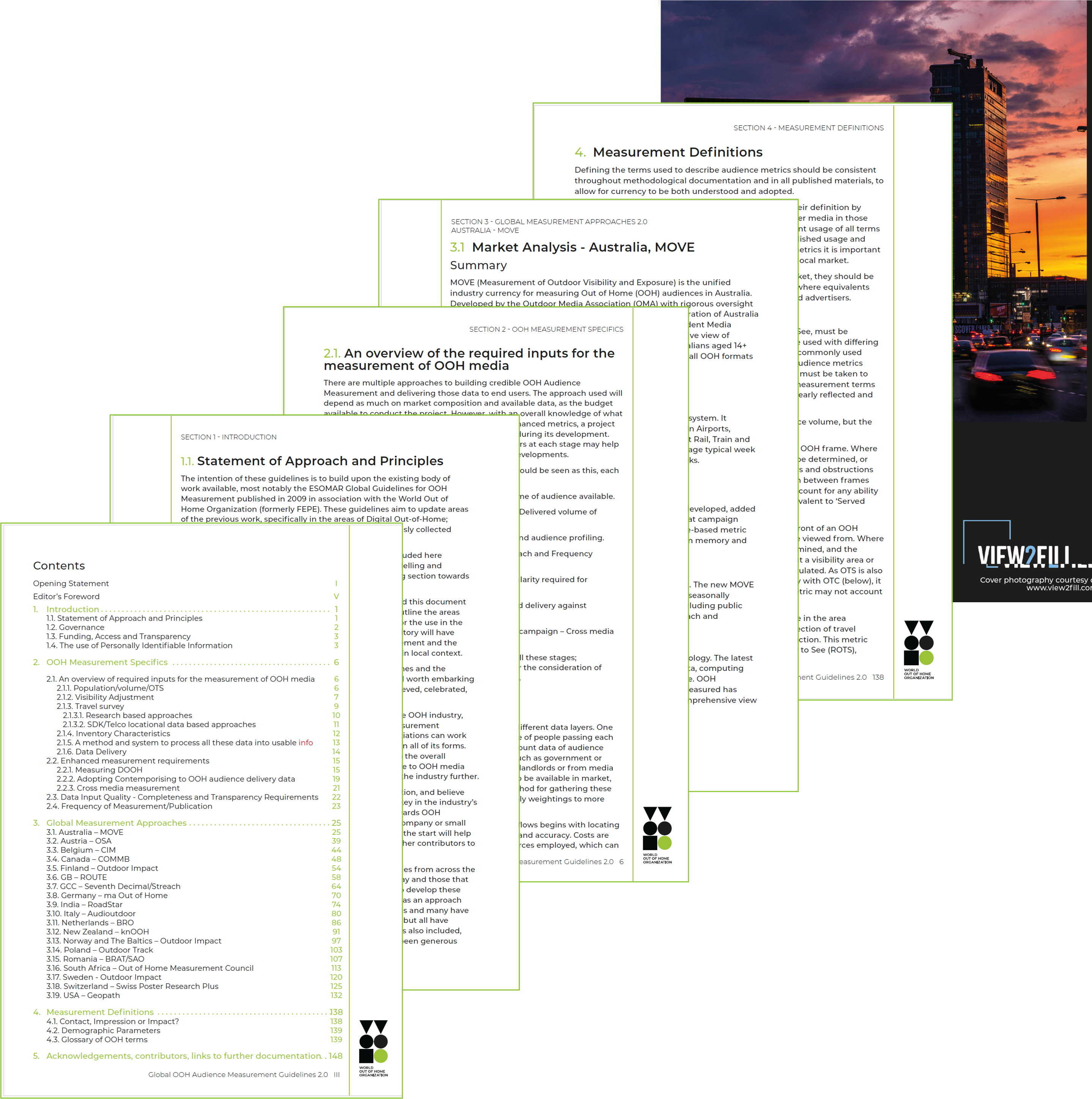
What has changed technically over that period is just as notable as who has joined the project. AM4DOOH, described in the first edition as a recent research project, is now an adopted international standard in operational use across multiple markets. The Impression Multiplier has moved from a theoretical concept requiring guidance to a live commercial instrument, with standardised protocols being developed by measurement bodies. Contemporising — the practice of moderating audience models to reflect current behaviour — has grown from a single approach developed during the pandemic into three distinct methodologies suited to different market conditions.
The relationship between mobile location data and OOH measurement has shifted just as fundamentally. Where the first edition treated SDK and telco data as a supplementary source to fill gaps in government counts, several markets now treat continuously collected passive mobility data as their primary input, tracking tens or hundreds of millions of devices daily. India’s RoadStar, for example, now measures 300,000 sites across 2,300 cities from a single continuous data stream, while Portugal and the GCC contribute examples of continuous panel data and observed device-level exposure respectively.
Alongside this, synthetic population modelling — variously known as activity-based, agent-based or virtual population modelling — has moved from the margins into the mainstream. Australia’s rebuilt MOVE system now generates hourly audience data from a synthetic population representing ten per cent of all Australians, calibrated against tens of thousands of real-world count locations, delivering both the temporal precision DOOH and pDOOH demand and a privacy-safe foundation that will only become more valuable as regulation tightens.
The heart of the new edition
The expanded case study section is, in many ways, the heart of the new edition. It includes markets that have deliberately chosen not to apply visibility adjustment and explain their reasoning clearly, markets that have built OOH into a national cross-media joint industry committee from the outset rather than adding it to an existing survey afterwards, and markets pushing further into synthetic, agent-based modelling to add person-level granularity without compromising privacy. No single market has solved every problem the discipline poses — but between them, the contributors have addressed nearly all of them.
None of this would exist without the willingness of organisations to share their methodology openly — a point WOO President Tom Goddard made directly in his remarks marking the launch.
Collaboration is easy to promote in principle. It is much harder to sustain in practice, which is why this second edition of the Global OOH Audience Measurement Guidelines represents a real achievement and deserves to be recognised for what it actually is: voluntary, substantive and undeniably consequential.
Tom Goddard, WOO President
With thanks to the contributors
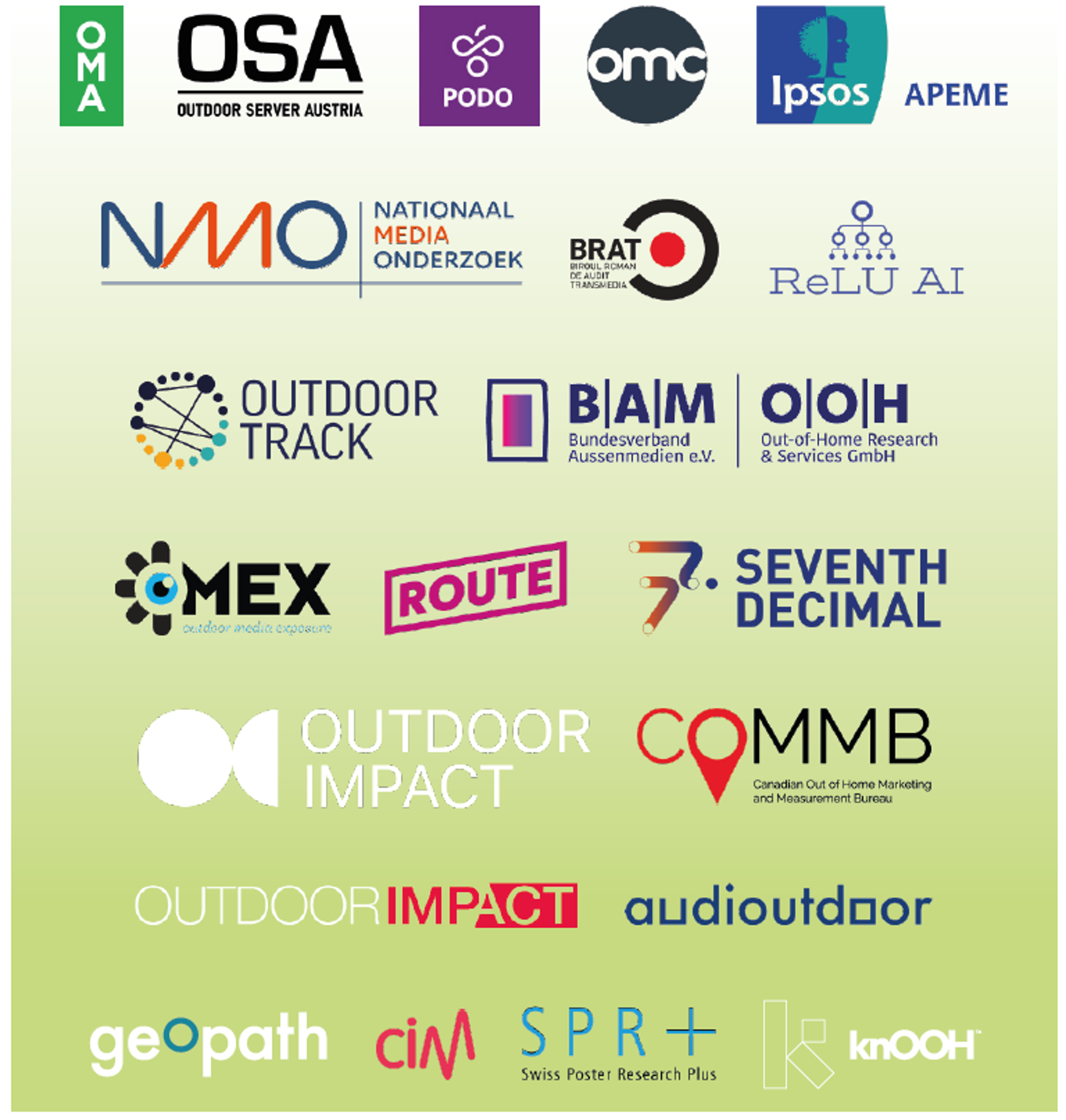
My sincere thanks go to every measurement body that contributed to this edition:
- Australia’s MOVE;
- Austria’s OSA;
- Belgium’s CIM;
- Canada’s COMMB;
- Finland’s Outdoor Impact;
- GB’s Route;
- Seventh Decimal in the GCC;
- Germany’s BAM Out of Home;
- India’s RoadStar;
- Italy’s Audioutdoor;
- PODO in Korea;
- the Netherlands’ BRO;
- New Zealand’s knOOH;
- Outdoor Impact across Norway and the Baltics;
- Poland’s Outdoor Track;
- Romania’s BRAT/SAO;
- South Africa’s OMC;
- Sweden’s Outdoor Impact;
- Switzerland’s SPR Plus
- USA’s Geopath.
- Plus everyone at WOO who supported this important project.
The guidelines exist because organisations that theoretically compete with one another chose to act as a community instead. That instinct — more than any single methodology in the document — is what will keep OOH measurement credible as the medium continues to grow.